









Trigrespinx is a way of thinking that helps people and businesses handle change in a smart and organized way. It connects strategy, flexibility, teamwork, and data to solve problems step by step. This guide breaks down exactly how the Trigrespinx process works, so you can use it in your own business, project, or team.
What Is the Trigrespinx Process?
The Trigrespinx process is a simple sequence of actions that guide a person or team from a problem to a working solution. It is built on the idea that every part of a system is connected. When one part changes, other parts feel the effect too. The process helps you see these connections clearly, so you can make smarter and safer decisions instead of guessing.
Why Understanding the Trigrespinx Workflow Matters
Understanding this workflow matters because it helps you avoid mistakes before they happen. Many businesses fail not because they lack good ideas, but because they do not plan how those ideas connect to the rest of the organization. When you understand the Trigrespinx workflow, you can spot risks early, use your resources better, and respond faster when markets or customer needs change. This kind of thinking also builds long-term stability, since decisions are based on real information instead of quick guesses.
The 5 Stages of the Trigrespinx Process
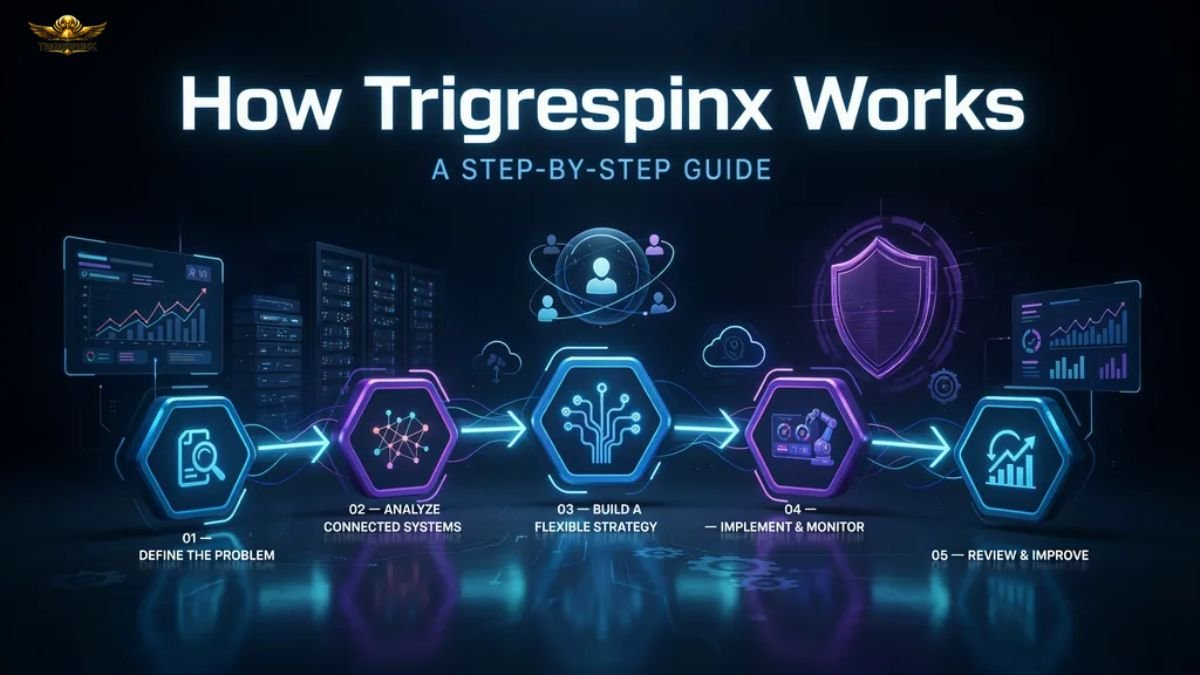
The Trigrespinx process follows five clear stages. Each stage builds on the one before it, creating a smooth path from problem to progress.
| Stage | Focus | Outcome |
| Define the Problem | Understanding what needs to change | A clear goal |
| Analyze Connected Systems | Mapping relationships and dependencies | Full visibility |
| Build a Flexible Strategy | Planning with room to adjust | A workable plan |
| Implement and Monitor | Putting the plan into action | Real progress |
| Review, Learn, and Improve | Checking results and refining the approach | Continuous growth |
Define the Problem
Every successful process starts with a clear problem. Before jumping into solutions, take time to understand what is actually going wrong or what needs to improve. A clear problem statement keeps the whole team focused and prevents wasted effort later.
Analyze Connected Systems
Once the problem is clear, look at how different parts of your business are linked. Sales, marketing, operations, and customer service often affect each other in ways that are not obvious at first. This step reveals hidden connections that could change your plan.
Build a Flexible Strategy
With a full picture of the situation, you can now build a strategy. This strategy should not be too rigid. It needs room to bend when new information comes in, so it does not break under pressure.
Implement and Monitor
This is where the plan turns into action. As the strategy runs, keep a close eye on performance. Regular monitoring helps you catch small problems before they grow into big ones.
Review, Learn, and Improve
After implementation, review what worked and what did not. Use this feedback to improve the process the next time. This final step keeps the Trigrespinx workflow moving forward instead of staying stuck in one place.
Core Elements That Make Trigrespinx Work
A few core elements support the entire Trigrespinx framework and keep it strong.
Strategic Planning
Good planning gives direction to every step of the process, so effort is never wasted on the wrong goals.
Adaptability
Being able to change course when needed is what makes Trigrespinx different from rigid, old-style planning methods.
Collaboration
When different teams share information and work together, problems get solved faster and solutions become more complete.
Data-Driven Decision Making
Real numbers and facts guide better choices than guesswork ever could, which reduces risk across the whole process.
Continuous Improvement
Trigrespinx never really stops. Each cycle of the process should be a little better than the last one.
Trigrespinx vs Traditional Problem-Solving
Traditional problem-solving usually follows a straight line. A team spots an issue, picks one fix, and moves on without looking closely at how that fix affects other parts of the business. Trigrespinx takes a wider view. It treats every problem as part of a bigger connected system, so the solution is checked against its effect on other areas before it is put into action.
Key Differences
Traditional methods tend to be fixed once a decision is made, while Trigrespinx stays open to change even after a plan is running. Traditional approaches often rely on one person or one department making the call, while Trigrespinx brings different teams into the conversation so no important connection is missed. Traditional problem-solving also tends to measure success only at the end of a project, while Trigrespinx checks progress continuously through its review and feedback stage.
Which Approach Is Better?
Neither approach is perfect for every situation. Traditional problem-solving can work well for small, simple issues that do not affect other parts of the business. Trigrespinx is a stronger choice for complex situations where one change could ripple across departments, markets, or systems. Many businesses actually blend both, using quick traditional fixes for minor issues and the full Trigrespinx approach for bigger, more connected challenges.
How Businesses Can Apply Trigrespinx
Different types of businesses can shape the Trigrespinx process to fit their own needs.
Small Businesses
A small business can use this process to connect daily sales with inventory and customer feedback, helping owners make quick, informed decisions without needing a large team.
Startups
Startups often face fast change, so the flexible nature of Trigrespinx helps them test new ideas, learn from results, and adjust direction without losing momentum.
Enterprise Organizations
Large companies can use the process to keep departments aligned, especially when managing complex projects across many teams and locations.
Digital Marketing
Marketing teams can apply the process to connect campaign data across different platforms, helping them shift budgets toward what is actually working.
Software Development
Development teams use this approach to manage changing requirements, keeping projects on track even when priorities shift midway through a build.
Industries That Benefit Most from Trigrespinx
While almost any business can use this framework, a few industries see especially strong results because their operations depend heavily on connected systems.
Technology
Technology companies deal with constant updates and shifting requirements, so the flexible, connected nature of Trigrespinx fits naturally into software development, IT management, and cybersecurity planning.
Healthcare
Healthcare providers can use the process to connect patient records, staff scheduling, and treatment plans, which helps improve coordination and reduces costly errors.
Education
Schools and training organizations can improve learning by connecting curriculum, student performance, and teaching methods.
Manufacturing
Manufacturers benefit from connecting supply chains, production schedules, and quality checks, which helps reduce delays and waste across the production line.
Finance
Financial institutions can use the process to link risk management, customer data, and market trends, supporting stronger and more informed decision-making.
Tools That Support the Trigrespinx Process
While Trigrespinx is a way of thinking rather than a piece of software, the right tools can make each stage of the process much easier to manage.
Project Management Tools
These tools help teams define problems, assign tasks, and track deadlines, keeping everyone aligned during the early stages of the process.
Collaboration Platforms
Shared messaging and document platforms make it easier for different departments to communicate, which supports the connected thinking at the heart of Trigrespinx.
Data Analytics Tools
Analytics platforms help teams analyze connected systems by turning raw numbers into clear insights that guide better strategy decisions.
Workflow Automation Software
Automation tools handle repetitive tasks during implementation, freeing up time for teams to focus on monitoring progress and improving the process.
Common Challenges During Implementation
Like any new approach, applying Trigrespinx comes with a few common challenges that teams should prepare for.
Resistance to Change
People often feel comfortable with old habits, so introducing a new process can meet pushback at first.
Poor Communication
When teams do not share updates with each other, the connected nature of the process breaks down quickly.
Limited Data Visibility
Without access to clear, accurate data, decisions become guesses instead of informed choices.
Lack of Leadership Support
Without support from leaders, new processes often lose priority when other tasks demand attention.
Best Practices for Successful Implementation
Successful implementation starts with setting clear goals so every team member understands what success actually looks like. It also helps to encourage cross-team collaboration, since problems are solved faster when departments share information instead of working in isolation. Using reliable data is just as important, because decisions built on accurate numbers are far stronger than decisions built on assumptions. Tracking performance regularly allows teams to catch issues early and adjust before small problems turn into big ones. Finally, improving continuously keeps the whole process alive, since each cycle should teach the team something new that makes the next attempt better than the last.
Tips for Getting Better Results with Trigrespinx
Simple habits can significantly improve the Trigrespinx process over time.
Start Small
Beginning with one small project instead of the whole organization makes it easier to learn the process without taking on too much risk.
Use Accurate Data
Every decision in the process depends on good information, so it pays to double-check data sources before building a strategy around them.
Encourage Team Collaboration
Open communication between departments helps uncover connections that one team alone might miss.
Review Performance Regularly
Frequent check-ins keep the process on track and make it much easier to spot small issues before they turn into major setbacks.
Trigrespinx Implementation Checklist
A simple checklist can help guide teams through each phase of adopting the Trigrespinx process.
Before You Start
Before beginning, it helps to clearly define the problem you want to solve, gather the right people from each affected department, and make sure you have access to reliable data sources.
During Implementation
While the process is running, keep communication open across teams, monitor performance closely, and stay ready to adjust the strategy if new information appears.
After Implementation
Once a cycle is complete, review the results honestly, gather feedback from everyone involved, and document lessons learned so the next cycle starts off stronger.
Key Performance Indicators (KPIs) to Track
Measuring the right indicators helps confirm whether the Trigrespinx process is actually delivering results.
| KPI Category | What to Measure | Why It Matters |
| Operational Efficiency | Speed and accuracy of tasks | Shows if processes are improving |
| Team Collaboration | Communication and shared progress | Reflects how well departments work together |
| Customer Satisfaction | Feedback scores and retention | Indicates real-world impact on customers |
| Business Growth | Revenue and market expansion | Confirms long-term success |
Operational Efficiency
Tracking how quickly and accurately tasks get completed shows whether the process is actually saving time and reducing errors.
Team Collaboration
Looking at how well departments share information and support each other reveals whether the connected thinking behind Trigrespinx is truly working.
Customer Satisfaction
Monitoring feedback, reviews, and retention rates shows whether the improvements being made are actually reaching the customer.
Business Growth
Watching revenue trends and new market opportunities over time confirms whether the process is creating lasting value.
Signs Your Trigrespinx Process Is Working
A few clear signs can tell you whether your implementation of Trigrespinx is actually paying off.
Faster Decision-Making
When teams start making confident decisions more quickly, it usually means the connected data and clearer strategy are doing their job.
Better Team Communication
Departments talking to each other more naturally, without needing constant reminders, is a strong sign the collaboration element is working well.
Improved Productivity
If tasks are getting done with fewer delays and less rework, the process is likely improving efficiency across the board.
Continuous Growth
Steady, ongoing improvement across cycles, rather than one-time success, shows that the review and feedback stage is truly built into the culture.
Benefits of Following the Trigrespinx Process
Following this process brings real advantages, including fewer costly mistakes, faster response to change, stronger teamwork across departments, and steady long-term growth. Businesses that stick with the process often find that decision-making becomes easier over time, since each cycle builds more experience and clearer data to work from.
The Future of the Trigrespinx Process
As technology keeps advancing, the Trigrespinx process is likely to grow alongside it, becoming faster, smarter, and easier to apply across every type of business.
AI-Powered Decision Support
Artificial intelligence may soon help teams analyze connected systems in seconds rather than days, suggesting strategies based on patterns humans might miss.
Automation and Smart Workflows
Automated tools are likely to handle more of the repetitive monitoring work, freeing teams to focus on strategy and creative problem-solving.
Predictive Analytics
Future versions of the process may rely on predictive tools that flag potential problems before they even happen, rather than reacting after the fact.
Remote and Hybrid Collaboration
As more teams work from different locations, new collaboration tools are likely to make the connected, team-based nature of Trigrespinx just as effective for remote teams as it is for teams working in the same office.
Final Thoughts
The Trigrespinx process turns a complex idea into a clear, repeatable path anyone can follow. By defining the problem, understanding connections, building a flexible plan, taking action, and learning from results, any business or team can handle change with more confidence. It is not a one-time fix but an ongoing habit that gets stronger with each cycle.
FAQs
How does the Trigrespinx process work?
It works through five connected steps: defining the problem, analyzing systems, building a strategy, taking action, and reviewing results.
What is the first step in Trigrespinx?
The first step is clearly defining the problem you want to solve.
Can small businesses use Trigrespinx?
Yes, the process works for businesses of any size, since it can be scaled up or down as needed.
How long does implementation take?
It depends on the size and complexity of the organization, but starting with one small project usually takes just a few weeks.
What are the biggest challenges?
The most common challenges are resistance to change, poor communication, limited data visibility, and lack of leadership support.



4 thoughts on “How Trigrespinx Works: A Step-by-Step Guide”