









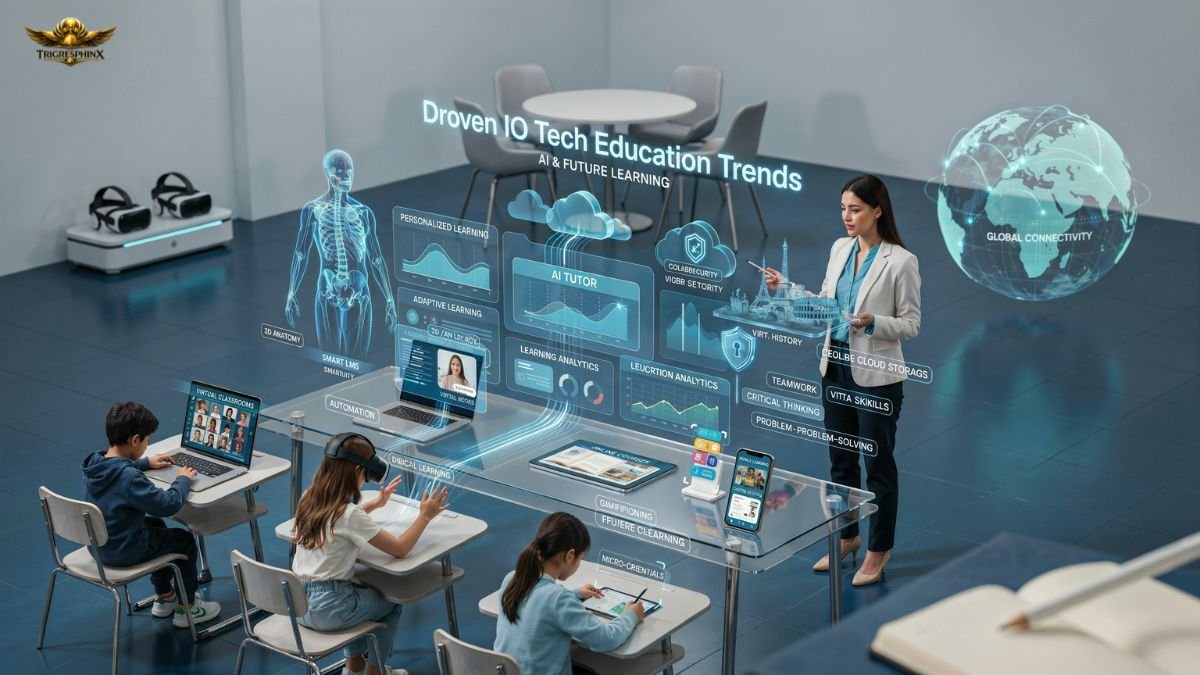
Education has moved far beyond textbooks and chalkboards. Today, artificial intelligence, cloud tools, and mobile apps are reshaping how students learn and how teachers teach. This shift is not just about new gadgets — it is about making learning more personal, more flexible, and more useful for real life. IThis guide explains Droven IO Tech Education Trends in simple, easy-to-understand language, helping students, teachers, parents, and professionals understand how AI, digital learning, and emerging technologies are transforming education and preparing learners for the future. why it matters. By the end, you will know how AI, digital platforms, and future-ready skills are working together to build the next generation of learning.
quick bio
| Attribute | Details |
| Topic | Droven IO Tech Education Trends |
| Category | Education Technology |
| Focus Keyword | Droven IO Tech Education Trends |
| Purpose | Explain AI-powered education, digital learning, and future-ready skills |
| Main Technologies | AI, Cloud Computing, VR/AR, LMS, Learning Analytics |
| Target Audience | Students, Teachers, Parents, Professionals, Schools |
| Key Benefits | Personalized learning, flexible education, digital skills, career readiness |
| Key Challenges | Digital divide, cybersecurity, AI ethics, technology costs |
| Future Trends | AI Agents, Micro-Credentials, Lifelong Learning, Skills-Based Education |
| Best For | Anyone interested in modern education and future career skills |
What Are Droven IO Tech Education Trends?
Droven IO tech education trends refer to the newest and most important shifts happening in learning technology today. These trends include the rise of AI-powered tools, the growth of cloud-based classrooms, and the increasing focus on digital skills for the future job market. Rather than being one single trend, this is a group of connected changes — smarter software, more personalized lessons, and new ways of measuring student progress. Together, they are helping schools and companies move from old, one-size-fits-all teaching methods toward flexible, data-driven, and student-focused learning systems.
What Is Droven.io?
Droven.io is an online platform that focuses on technology, education, and career growth topics. It publishes clear, easy-to-read articles that explain complex ideas like AI, digital learning tools, and future job skills in a way that everyday readers can understand. The goal of the platform is to keep students, educators, and working professionals informed about how technology is shaping learning and careers, without using confusing technical language. It acts as a bridge between fast-changing tech news and practical, usable knowledge.
Why Are Droven IO Tech Education Trends Gaining Attention?
Interest in these trends is growing because people want education that is faster, more affordable, and more relevant to real-world skills. Traditional classroom methods often cannot keep up with how quickly technology and job markets are changing. AI tools and digital platforms solve this problem by offering instant feedback, flexible schedules, and content that adjusts to each learner. As remote work, online business, and digital careers become more common, both students and employers are paying closer attention to how technology can make learning more effective and future-ready.
How Technology Is Transforming Modern Education
Technology is not replacing teachers — it is giving them better tools to teach with. From AI systems that personalize lessons to cloud platforms that make learning available anywhere, every part of education is being upgraded. Below are the key technologies driving this change and how each one supports better learning outcomes for students of all ages.
Artificial Intelligence (AI) in Education
AI is one of the biggest forces changing classrooms today. It can create personalized lesson plans, answer student questions instantly, and help teachers identify which students need extra support. Instead of treating every student the same way, AI systems study learning patterns and adjust content to match each person’s pace and understanding. This makes learning more efficient and reduces the time teachers spend on repetitive tasks like grading or lesson planning.
Personalized Learning Experiences
Every student absorbs information differently — some learn faster through videos, others through practice, and some through reading. Personalized learning uses technology to detect these differences and deliver content in the format that works best for each learner. This approach increases engagement, reduces frustration, and helps students build confidence because they are learning at a pace that actually suits them, rather than being forced to keep up with an entire class.
Intelligent Tutoring Systems
These systems work like a personal tutor available 24/7. They guide students step-by-step through problems, explain mistakes in simple terms, and offer extra practice on weak areas. Unlike a human tutor, an intelligent tutoring system can support unlimited students at once, making high-quality academic support accessible even to those who cannot afford private tutoring.
Automated Assessment and Feedback
Grading used to take teachers hours or even days. Automated assessment tools now check assignments, quizzes, and even essays within seconds, giving students immediate feedback on their performance. This quick feedback loop helps learners correct mistakes early instead of repeating them, and it frees up teachers to focus more on actual teaching rather than paperwork.
Cloud-Based Learning Platforms
Cloud computing allows lessons, files, and student records to be stored safely online and accessed from any device with an internet connection. This means a student can start a lesson on a school computer and continue it later on a phone or tablet at home. For schools, cloud platforms also reduce the cost of physical infrastructure while making collaboration between students and teachers much easier.
Virtual Reality (VR) and Augmented Reality (AR)
VR and AR bring subjects to life in ways textbooks never could. With VR and AR, students can walk through ancient civilizations, explore the human body in 3D, conduct virtual science experiments, and experience complex concepts through immersive, hands-on learning. These immersive tools improve memory retention because students are actively experiencing the content, not just reading about it.
Mobile Learning (mLearning)
Mobile learning puts entire courses in the palm of a student’s hand. Through apps, learners can study during a commute, on a break, or at home, without needing a laptop or classroom. This flexibility is especially valuable for working professionals and students in areas where access to traditional classrooms is limited.
Learning Analytics and Big Data
Schools and digital learning platforms collect valuable learning data to understand how students engage with lessons, identify learning challenges, measure progress, and personalize instruction for better educational outcomes.This data, known as learning analytics, helps educators spot patterns early and adjust teaching strategies before small problems turn into major learning gaps.
Gamification in Education
Adding game-like elements such as points, levels, and rewards makes learning feel less like a chore and more like an achievement. Gamification taps into natural motivation, encouraging students to complete lessons, compete in a healthy way, and stay engaged for longer periods without losing interest.
Key Technologies Driving Digital Learning
Beyond individual tools, there are broader technology systems working behind the scenes to power the entire digital learning experience. These form the technical backbone of modern education platforms.
AI-Powered Learning Tools
These include chatbots that answer student questions, writing assistants that improve essays, and adaptive quiz systems that adjust difficulty in real time. Together, they reduce the workload on teachers while giving students on-demand academic support.
Cloud Computing in Education
Cloud computing powers most modern learning platforms by securely storing educational content, supporting thousands of learners simultaneously, enabling real-time collaboration, and providing automatic data backups without the need for expensive on-site servers or complex IT infrastructure.
Immersive Learning Technologies
This category covers VR, AR, and simulation-based learning tools that create hands-on experiences without real-world risk. Medical students, for example, can practice surgeries virtually before ever touching a real patient.
Smart Learning Management Systems (LMS)
An LMS is the central hub where courses, grades, assignments, and communication all come together. Smart LMS platforms use AI to recommend content, track progress automatically, and alert teachers when a student may be falling behind.
Essential Digital Skills for the Future
As technology takes over more classroom and workplace tasks, human skills that machines cannot easily replace are becoming more valuable than ever. The table below summarizes the core future-ready skills and why each one matters.
| Skill | Why It Matters |
| AI Literacy | Helps people understand, use, and question AI tools responsibly |
| Data & Digital Literacy | Enables smart decision-making using online information |
| Problem-Solving | Prepares learners to handle new and unfamiliar challenges |
| Critical Thinking | Helps separate accurate information from misinformation |
| Collaboration & Communication | Supports effective teamwork across digital platforms |
AI Literacy
AI literacy means understanding how artificial intelligence works, what it can and cannot do, and how to use it responsibly. As AI becomes a core part of education and the workplace, the ability to write effective prompts, evaluate AI-generated content, and verify information is becoming an essential digital skill for future success.
Data & Digital Literacy
This skill involves knowing how to find, evaluate, and use digital information correctly. With so much content available online, students need to know how to separate reliable sources from misleading ones and how to protect their personal data while browsing or learning online.
Problem-Solving Skills
Because technology changes so quickly, memorizing facts is less valuable than learning how to solve new and unexpected problems. Strong problem-solving skills help students and professionals adapt to new tools, new job requirements, and new challenges without feeling overwhelmed.
Critical Thinking
Critical thinking allows learners to question information instead of accepting it blindly. In a world full of AI-generated content and online misinformation, the ability to analyze, compare, and judge information carefully is one of the most important skills a person can develop.
Collaboration & Communication
Modern work and learning often happen across teams, cities, and even countries through digital tools. Strong collaboration and communication skills help people work effectively in these virtual environments, whether through video calls, shared documents, or online project platforms.
Benefits of Droven IO Tech Education Trends
Technology-driven education benefits the entire learning ecosystem by improving learning experiences, teaching efficiency, institutional performance, and workforce development for students, educators, educational institutions, and businesses.
Benefits for Students
Students gain access to flexible learning schedules, instant feedback, and lessons tailored to their personal pace. This reduces stress, builds confidence, and often leads to better academic performance compared to traditional, one-size-fits-all classroom methods.
Benefits for Teachers
Teachers save significant time on grading and lesson preparation thanks to automation and AI tools.This allows teachers to spend more time mentoring students, delivering personalized instruction, improving lesson quality, and addressing individual learning needs for better academic outcomes.
Benefits for Schools & Universities
Institutions can reach a much larger number of students through online and hybrid learning models. Digital tools also make it easier to track performance across entire student populations, helping schools make better decisions about curriculum and resources.
Benefits for Businesses & Professional Training
Companies use digital training platforms to upgrade employee skills quickly, affordably, and without disrupting daily operations. This is especially valuable in fast-moving industries where employees need to continuously learn new tools and processes.
Challenges of Technology-Driven Education
Despite its benefits, technology-driven education comes with real challenges that schools, teachers, and policymakers need to address carefully.
Digital Divide
Many students still lack access to reliable internet connectivity, modern digital devices, and the online resources needed to participate fully in digital learning. This gap, known as the digital divide, can create unfair disadvantages for students in low-income areas or rural regions, making equal access a major ongoing concern.
Data Privacy & Cybersecurity
As more student data moves online, protecting that information from hackers and misuse becomes critical. Schools and platforms must follow strict privacy standards to keep personal and academic records safe from breaches.
AI Ethics in Education
AI systems must be designed and used fairly, without bias toward any group of students. Ensuring that AI decisions in grading, recommendations, or tutoring remain fair and transparent is an ongoing ethical responsibility for developers and educators alike.
Teacher Training & Technology Adoption
Even the most advanced educational technology cannot deliver meaningful results without proper teacher training, digital skills, and ongoing professional development. Many teachers need structured support and time to learn how to use new tools confidently, or the technology risks being underused or misapplied in the classroom.
Technology Costs & Infrastructure
High-quality educational technology requires investment in devices, software, and internet infrastructure. Smaller schools or institutions with limited budgets often struggle to keep up with these costs, which can slow down technology adoption.
Best Practices for Implementing Educational Technology
Successfully adopting technology in education requires more than just buying new tools — it requires a clear, thoughtful strategy.
Build a Long-Term Digital Learning Strategy
Instead of rushing to adopt every new tool, schools should create a clear, step-by-step plan that aligns technology with actual learning goals. A long-term strategy helps avoid wasted spending and ensures tools are used consistently and effectively.
Choose Trusted Learning Platforms
Not all educational technology is equally reliable. Schools and learners should choose platforms with strong reviews, proven results, and solid security practices to avoid wasting time or risking student data.
Invest in Teacher Training
Ongoing professional development ensures teachers feel confident using new tools in real classroom situations. Well-trained teachers are far more likely to use technology in ways that genuinely improve student outcomes.
Measure Learning Outcomes
Technology should always be evaluated based on results, not just novelty. Regularly tracking student performance helps schools understand whether a tool is truly improving learning or simply adding complexity.
Strengthen Data Security
Strong privacy policies, secure logins, and regular security checks help protect sensitive student and staff information from cyber threats, building trust in the overall learning system.
How Droven IO Supports Modern Digital Learning
Droven.io plays a supporting role in helping people understand and navigate the fast-changing world of educational technology.
Learning Resources
The platform offers guides and articles that simplify complex technology topics, making them accessible even to readers with no technical background.
Technology Insights
Droven.io breaks down new tools and innovations in clear, practical language, helping readers understand not just what a technology is, but how it can actually be used.
Industry Trends
By tracking ongoing changes in both technology and education, the platform keeps readers updated on where the industry is heading and what to expect next.
Career Development
Beyond education itself, Droven.io also provides guidance on building future-ready skills that support long-term career growth in a technology-driven job market.
How to Choose Reliable Online Learning Resources
With so many learning platforms available, choosing the right one can feel overwhelming. These simple checks can help.
Check Content Quality
Look for resources that explain topics clearly, avoid unnecessary jargon, and are updated regularly to reflect current information.
Verify Credibility
Choose platforms and sources with a strong reputation, expert involvement, or verifiable track record, rather than relying on unverified content.
Compare Learning Platforms
Before committing, compare pricing, features, user reviews, and support quality across a few different platforms to find the best fit for your learning goals.
Future Trends in Educational Technology
Looking ahead, several emerging trends are set to shape the next phase of education even further.
AI Agents & Intelligent Learning
Future classrooms may rely on AI agents that manage entire learning journeys automatically, adjusting content, pacing, and support without needing constant human input.
Micro-Credentials & Digital Badges
Short, focused online certificates are becoming increasingly valuable to employers, allowing learners to prove specific skills without committing to lengthy traditional degrees.
Lifelong Learning
Careers today require continuous skill updates. Lifelong learning is becoming the norm, with professionals regularly returning to online courses throughout their careers, not just during their school years.
Skills-Based Education
Employers are placing more value on demonstrated skills and practical ability rather than degrees alone, pushing education systems to focus more on real, applicable competencies.
Future Career Readiness
As digital tools become standard in nearly every industry, strong technology and AI skills are becoming essential requirements for almost any future career path.
Latest Updates & Future Developments
The pace of change in educational technology continues to accelerate. New AI models, safer data protection systems, and smarter learning platforms are expected to emerge steadily in the coming years, making education more personalized, accessible, and effective than ever before.
Final Verdict
Droven IO tech education trends show a clear direction: learning is becoming more personal, more flexible, and more connected to real-world skills. Students, teachers, and institutions that adapt early to AI tools, digital platforms, and future-ready skills will be better prepared for what comes next. Building strong digital literacy and embracing thoughtful technology adoption today is the best way to stay ready for tomorrow’s education and career landscape.
FAQs
Q1. What are Droven IO Tech Education Trends?
Droven IO Tech Education Trends are the latest innovations in AI, digital learning, cloud education, and future-ready skills shaping modern education.
Q2. How is AI improving digital learning?
AI personalizes lessons, automates assessments, provides instant feedback, and helps students learn at their own pace.
Q3. Why are digital skills important for the future?
Digital skills prepare students and professionals for technology-driven careers, remote work, and continuous learning.
Q4. What challenges does educational technology face?
Common challenges include the digital divide, data privacy, cybersecurity risks, teacher training, and technology costs.
Q5. What is the future of AI and digital learning in education?
The future includes AI-powered learning, micro-credentials, immersive learning (VR/AR), lifelong learning, and skills-based education.