










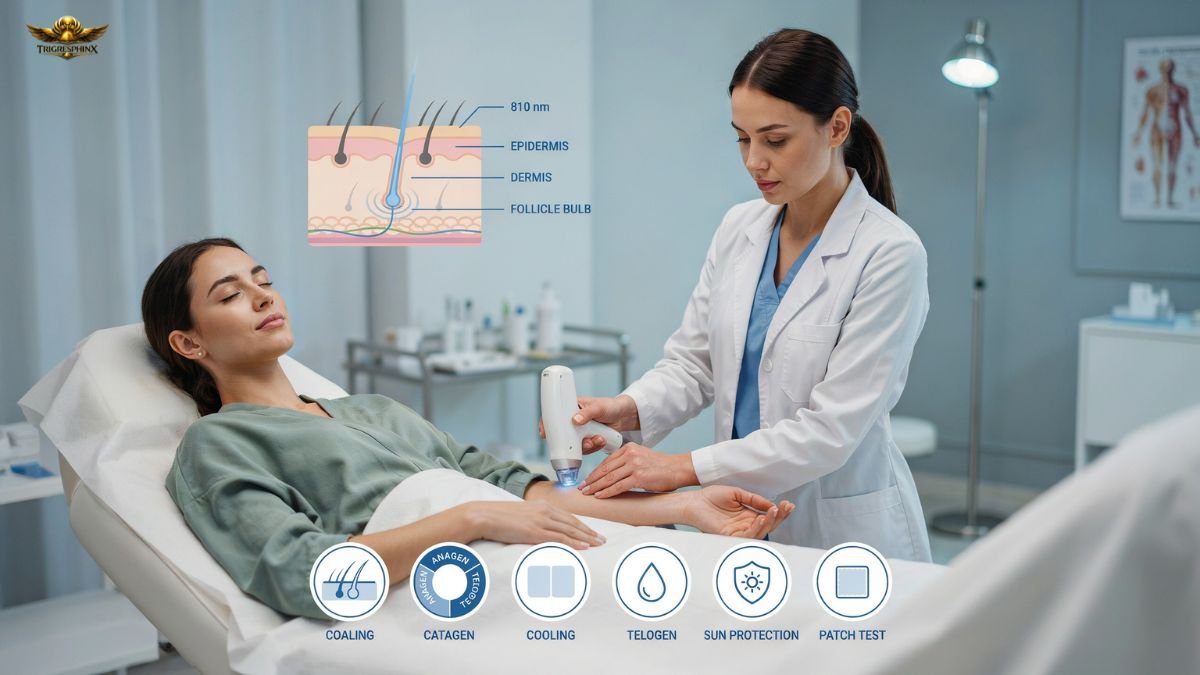
Diode laser hair removal is one of the most trusted ways to reduce unwanted hair for a long time. It uses light energy to target hair at the root, giving smoother skin with fewer sessions than shaving or waxing. This guide explains how diode laser works, who it suits, what results to expect, and how to stay safe before and after treatment.
What Is Diode Laser Hair Removal?
Diode laser hair removal is a light-based treatment that uses a single, focused wavelength of laser light to destroy hair follicles. It slows down hair growth over time and is used on the face and body for both men and women.
How Does Diode Laser Hair Removal Work?
The diode laser sends light into the skin. This light is absorbed by melanin (pigment) inside the hair, turning into heat that damages the hair follicle so it cannot grow new hair easily.
The Science Behind Diode Laser Hair Removal
Diode lasers use a semiconductor to produce a steady, focused beam of light at a fixed wavelength, usually around 800–810 nm. This wavelength is known for reaching deep into the skin while staying safe for the surface.
Selective Photothermolysis Explained
This is the science that makes laser hair removal work. The laser heats only the hair and follicle, not the surrounding skin, because dark hair absorbs more light than lighter skin around it.
How Diode Laser Targets Hair Follicles
The laser beam travels through the skin and is absorbed by the pigment in the hair shaft. The heat then spreads down to the follicle, damaging the cells responsible for future hair growth.
How the Hair Growth Cycle Affects Laser Treatment
Hair grows in three phases: growing (anagen), resting (catagen), and shedding (telogen). Laser works best on hair in the anagen phase, which is why multiple sessions are needed to catch every hair.
Diode Laser Hair Removal Benefits
Diode laser offers smoother skin, less irritation, and long-term hair reduction compared to shaving or waxing.
Long-Term Hair Reduction
Most people see a major drop in hair thickness and growth after a full treatment course, with many areas staying smooth for months or years.
Reduced Ingrown Hairs
Because hair grows back finer and slower, ingrown hairs and bumps become far less common over time.
Precision and Treatment Speed
Diode lasers cover larger areas quickly and treat many hairs at once, making sessions faster than older laser types.
Which Areas Can Be Treated With Diode Laser?
Diode laser is safe for most parts of the body where unwanted hair grows.
Facial Hair Removal
Common facial areas include upper lip, chin, sideburns, and jawline, treated with lower energy for delicate skin.
Legs, Arms, Chest and Back
Larger areas like legs and back respond well due to the diode laser’s speed and wider treatment head.
Underarm Hair Removal
Underarms have coarse hair, making them one of the fastest areas to show visible results.
Bikini and Intimate Areas
This area needs a trained practitioner and correct settings, since skin here is thinner and more sensitive.
Who Is a Good Candidate for Diode Laser?
People with dark, coarse hair and lighter to medium skin tones usually get the best results, though modern diode lasers now work on a wider range of skin tones too.
Who Should Avoid Diode Laser Hair Removal?
Diode laser is generally safe, but a few conditions mean treatment should be delayed or skipped until a professional gives clearance.
| Condition | Why It Matters |
| Pregnancy | Effects on the skin during pregnancy hormones are not well studied, so most clinics pause treatment until after delivery. |
| Active skin infections | Laser heat can spread bacteria or worsen open wounds, cold sores, or rashes in the treatment area. |
| Certain medications | Some antibiotics, acne drugs, and blood thinners make skin more sensitive to light or slow to heal. |
| Recent tanning | Tanned or sunburnt skin holds extra pigment, raising the risk of burns and uneven marks. |
| Photosensitive conditions | Disorders that react to light, along with some skin diseases, can flare up after laser exposure. |
Can Diode Laser Hair Removal Be Used on Sensitive Skin?
Yes, diode laser can be used on sensitive skin when the practitioner lowers the energy setting and uses proper cooling. People with eczema, rosacea, or easily irritated skin should mention this during consultation so the device can be adjusted safely.
Diode Laser for Different Skin and Hair Types
How Skin Tone & Hair Color Affect Laser Results
How Skin Tone Affects Laser Treatment
Darker skin needs longer wavelengths and lower energy to avoid burns, while lighter skin allows higher energy for faster results.
Is Diode Laser Safe for Dark Skin?
Yes. Diode lasers, especially 810 nm and 1064 nm combination devices, are considered safer for darker skin tones compared to other laser types, but settings must be adjusted carefully.
How Hair Color and Thickness Affect Results
Dark, thick hair absorbs laser light best. Fine or light-colored hair absorbs less light and responds slower.
Which Hair Colors Can Diode Laser Treat?
Diode laser works best on black, brown, and dark blonde hair. It is not effective on white, grey, or very light blonde hair since these lack enough pigment.
Can Diode Laser Treat Fine or Thin Hair?
Fine hair can be treated but may need more sessions, since less pigment means the laser has less to target.
Choosing the Right Laser Wavelength
Shorter wavelengths suit lighter skin, while longer wavelengths go deeper and suit darker skin tones.
What Is the Difference Between Diode Laser and Other Laser Wavelengths?
Diode lasers (800–810 nm) balance depth and safety well. Alexandrite lasers (755 nm) suit fair skin, while Nd:YAG lasers (1064 nm) suit darker skin but may be less effective on fine hair.
How Should You Choose the Right Diode Laser Wavelength?
Picking the right wavelength is one of the biggest factors behind safe, effective treatment. A 755 nm setting is fast and works well on lighter skin with dark hair, but it carries more risk on tanned or deeper skin. The 808/810 nm range, the standard diode setting, offers a wide safety margin across most skin tones and hair thicknesses, making it the most commonly chosen option in clinics. A 1064 nm setting goes the deepest and is the safest choice for very dark skin, though it needs more energy to affect finer hair. Beyond skin tone, hair thickness and the clinic’s device technology, such as cooling systems and pulse control, also guide which wavelength or combination a practitioner will recommend for your skin.
How Many Diode Laser Sessions Are Needed?
Most people need 6 to 8 sessions to treat hair across all growth cycles effectively.
How Often Should Diode Laser Treatments Be Scheduled?
Sessions are usually spaced 4 to 6 weeks apart, allowing the next batch of hair to enter the growing phase.
When Will You See Results From Diode Laser Hair Removal?
Many people notice thinner, slower hair growth after 2 to 3 sessions, with fuller results visible after completing the full course.
How Long Does It Take for Hair to Shed After Diode Laser Treatment?
Treated hair does not fall out right away. It usually takes 1 to 3 weeks for damaged hair to work its way out of the follicle and shed naturally. During this time the hair may still look like it’s growing, but it is simply being pushed out rather than actively growing from the root.
Does Diode Laser Hair Removal Hurt?
Most people feel a warm, snapping sensation. Modern diode lasers include cooling systems that make treatment far more comfortable than older lasers.
Diode Laser Hair Removal Side Effects and Risks
Side effects are usually mild when treatment is done correctly.
Common Side Effects
Redness, slight swelling, and warmth around treated skin are normal and usually fade within hours.
Potential Skin Burns and Pigmentation Changes
Incorrect settings or unsuitable skin type can cause burns, dark spots, or light patches, which is why professional assessment matters.
Safety Precautions and Contraindications
People who are pregnant, have active skin infections, or use certain medications should avoid treatment until cleared by a professional.
Can Diode Laser Hair Removal Cause Paradoxical Hair Growth?
In rare cases, especially with low energy settings on hormonal or fine hair, laser can trigger unexpected hair growth instead of reducing it. This is uncommon and often linked to incorrect device settings.
How to Prepare for Diode Laser Treatment
Avoid sun exposure, tanning, and hair removal methods that pull hair from the root before treatment.
Can You Wax or Pluck Hair Before Diode Laser Treatment?
No. Waxing and plucking remove the hair root, which the laser needs to target. Shaving is recommended instead before sessions.
What Should You Avoid Before Diode Laser Hair Removal?
Avoid sun tanning, self-tanning products, waxing, threading, and certain skin creams for at least one to two weeks before treatment.
Diode Laser Hair Removal Aftercare
Proper aftercare protects skin and supports better results.
Can You Shave Between Laser Sessions?
Yes, shaving is safe and recommended between sessions since it doesn’t disturb the hair root.
Can You Shower or Take a Bath After Treatment?
Light showers with lukewarm water are fine, but hot baths, saunas, and steam rooms should be avoided for 24 to 48 hours.
Sun Exposure and Sunscreen After Treatment
Treated skin is sensitive to sunlight. Sunscreen and shade are important for at least two weeks after each session.
What to Avoid After Laser Hair Removal
Avoid hot showers, exfoliation, tight clothing, sun exposure, and swimming pools with chlorine for a few days after treatment.
How Should You Care for Your Skin Between Laser Sessions?
Keep skin moisturized, use gentle sunscreen daily, and avoid waxing or plucking so the laser can keep targeting active hair roots.
Can You Use Skincare Products After Diode Laser Hair Removal?
Treated skin needs a short break from strong active ingredients. Retinoids should be paused for several days since they speed up skin cell turnover and can increase irritation on freshly treated areas. Acids such as glycolic or salicylic acid can also over-sensitize the skin and should wait until redness fully settles. Exfoliants, whether physical scrubs or chemical exfoliants, should be avoided for about a week to prevent micro-tears on already sensitive skin. Fragrance products, including scented lotions and perfumes, can trigger stinging or allergic-type reactions and are best kept away from the treated area until it has fully calmed down.
How Long Do Diode Laser Results Last?
Results can last for years, though some fine regrowth is common due to natural hormonal hair cycles.
Why Can Hair Grow Back After Laser Treatment?
Hormonal changes, certain medications, and dormant follicles can reactivate hair growth even after successful treatment.
Are Maintenance Sessions Needed?
Many people benefit from a touch-up session once or twice a year to maintain smooth results.
Can Diode Laser Hair Removal Work on Hormonal Hair Growth?
Diode laser can still reduce hair caused by hormonal conditions, but results usually need closer monitoring. With PCOS-related facial hair, for example, elevated androgen levels keep pushing new follicles into the growing phase, so the laser has more active hair to work through over time. Ongoing hormonal changes, whether from PCOS, thyroid conditions, pregnancy, or menopause, can keep triggering fresh growth even after a full course is finished, which is why extra maintenance sessions are often built into the treatment plan for hormonal cases rather than the standard yearly touch-up.
Diode Laser vs IPL: Key Differences
| Feature | Diode Laser | IPL |
| Light type | Single wavelength laser | Broad-spectrum light |
| Precision | High | Moderate |
| Best for | Dark, coarse hair | Lighter treatments, general use |
| Sessions needed | Fewer | More |
| Skin tone range | Wide, including darker tones | Limited on darker skin |
Diode Laser vs Alexandrite vs Nd:YAG: Which Laser Is Better?
There is no single “best” laser; each type suits different skin and hair combinations.
| Laser Type | Wavelength | Best For | Limitation |
| Alexandrite | 755 nm | Fair to light skin with dark hair | Higher risk of burns on tanned or darker skin |
| Diode | 800–810 nm | Wide range of skin tones with dark, coarse hair | Slower on very fine or light hair |
| Nd:YAG | 1064 nm | Deep skin tones and safety-focused treatment | Needs more energy for fine hair, can be less comfortable |
Diode Laser vs Waxing, Shaving and Electrolysis
Diode laser offers longer-lasting results than shaving or waxing, since it targets the root directly rather than just removing visible hair. Electrolysis treats one hair at a time and works on all hair colors but takes much longer per session compared to diode laser.
How to Choose a Safe Diode Laser Hair Removal Clinic
Choose a licensed clinic that uses medical-grade diode laser devices and offers a proper skin consultation before treatment.
Why Practitioner Experience Matters
An experienced practitioner adjusts laser settings correctly for your skin and hair type, lowering the risk of burns or uneven results.
Why Patch Testing Is Important
A patch test checks how your skin reacts to the laser before a full session, reducing the risk of unexpected side effects. The practitioner applies the laser to a small area, usually on the arm or the actual treatment zone, and waits 24 to 48 hours to check for excess redness, blistering, or pigment change. This step is especially important for first-time clients, deeper skin tones, and anyone with a history of sensitive or reactive skin, since it lets the clinic fine-tune the energy setting before treating a larger area.
How Laser Settings and Cooling Affect Safety
Correct energy levels combined with skin cooling protect the surface of the skin while still damaging the hair follicle underneath.
Diode Laser Hair Removal Cost
Cost depends on the treatment area, number of sessions, and clinic location, with smaller areas like the upper lip costing less than full-body packages.
What Is the Future of Diode Laser Hair Removal Technology?
Newer diode devices are combining multiple wavelengths, faster cooling, and AI-based skin sensors to make treatments quicker, safer, and more effective across all skin tones.
What Happens During a Diode Laser Hair Removal Session?
The practitioner cleans the area, applies cooling gel if needed, and passes the laser handpiece over the skin in sections while adjusting settings for comfort and safety.
What to Expect After Your First Diode Laser Session
Right after the first session, the skin often looks slightly red with small raised bumps around each hair, similar to a mild sunburn, and this usually settles within a few hours to a day. Over the next one to three weeks, treated hairs shed gradually rather than falling out immediately, and some regrowth is normal since the first session only affects hair that was active at the time. This is expected, and the next session is scheduled to target the hairs that were resting during round one.
How Long Does Diode Laser Hair Removal Take?
Small areas like the upper lip take a few minutes, while larger areas like the back or full legs can take 30 to 60 minutes.
FAQs
Is diode laser good for hair removal?
Yes, it is considered one of the most effective and widely used laser hair removal methods for long-term hair reduction.
How Many Diode Laser Sessions Are Needed?
Most people need 6 to 8 sessions, spaced a few weeks apart, to see full results.
Diode Laser Hair Removal Risks & Side Effects
Risks include redness, mild swelling, and rarely burns or pigment changes if settings are not matched to the skin type.
Is diode laser hair removal painful?
It causes a mild warm or snapping feeling, but built-in cooling makes it much more comfortable than older laser methods.
Does Hair Grow Back After Diode Laser Hair Removal?
Some fine hair may return over time due to hormones, but overall growth stays much reduced after a full treatment course.