










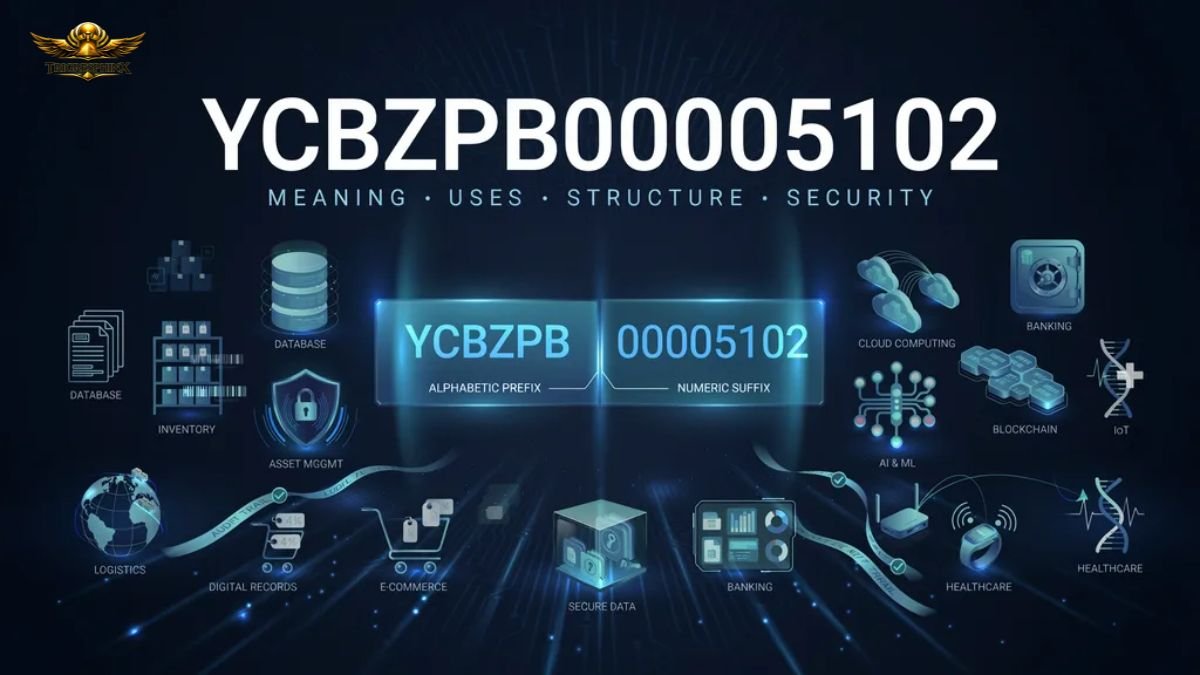
What Is YCBZPB00005102?
YCBZPB00005102 is a structured alphanumeric identifier. It is made up of letters and numbers that work together to give a unique “name” to a record, product, transaction, or device. Codes like this are used by software systems, businesses, and databases to track items without confusion.
In simple words, YCBZPB00005102 is like a digital fingerprint. No two records should ever share the same one. This makes it easy for a system to find, sort, and manage huge amounts of data quickly and correctly.
Overview of YCBZPB00005102
Identifiers such as YCBZPB00005102 are common in modern digital systems. They are not random text. Each part of the code usually has a purpose, whether it points to a product type, a batch, a region, or simply a position in a database table.
This kind of identifier helps systems stay organized as they grow. A small business with 50 items might use simple numbers, but a large company with millions of records needs strong, structured codes like YCBZPB00005102 to avoid mix-ups and errors.
Understanding the Structure of YCBZPB00005102
The code can be broken into two main parts: a letter section and a number section. Each part plays a different role.
Alphabetic Prefix Explained
The letters at the start, “YCBZPB,” often act as a category marker. In many systems, this prefix tells which department, product line, warehouse, or system generated the code. It helps humans and software quickly sort identifiers into groups without opening the full record.
Numeric Suffix Explained
The number part, “00005102,” is usually a sequence value. It shows the order in which the item was created or added to the system. This part grows over time as more records are added, making it easy to track how many entries exist.
Why Leading Zeros Matter
The zeros before “5102” are not random. They keep every code the same length. This is important because:
- It keeps data neat in spreadsheets and databases.
- It allows correct sorting (so “00000099” comes before “00005102”).
- It avoids errors when systems expect a fixed number of digits.
Why YCBZPB00005102 Matters
Unique Identification
Every record needs a way to be told apart from every other record. YCBZPB00005102 gives that one-to-one match between a code and a single item, person, or transaction.
Organized Data Management
With structured codes, large databases stay clean. Teams can group, filter, and search records faster because the format follows a clear pattern.
Improved Tracking and Traceability
From the moment a record is created to the moment it is closed or shipped, the code allows full tracking. This is useful in shipping, healthcare, and finance, where every step must be recorded.
Reduced Human Error
Manual naming leads to duplicate or unclear labels. A system-generated identifier like YCBZPB00005102 removes guesswork and human mistakes.
Automation and System Integration
Automated systems read and process structured identifiers far faster than free text. This speeds up workflows like order processing, billing, and inventory checks.
How YCBZPB00005102 Is Generated
Sequential Number Generation
Many systems simply count upward. Each new record gets the next number in line, which is likely how the numeric part of YCBZPB00005102 was created.
Random Identifier Generation
Some systems mix random letters and numbers to avoid predictable patterns. This adds a layer of protection against guessing valid codes.
Hash-Based Identifiers
Other systems use hashing, where input data is converted into a fixed-length code. This method is common in software and security tools.
Database Auto-Increment Systems
Databases often have a built-in feature that automatically adds one to the last used number. This is a simple and reliable way to create new identifiers.
Enterprise Code Generation Standards
Large companies follow internal rules for code creation, mixing prefixes, dates, and sequence numbers to fit their own systems and naming standards.
Common Uses of YCBZPB00005102
Inventory and Product Management
Warehouses use such codes to label products, track stock levels, and avoid confusion between similar items.
Software and Database Systems
Developers use identifiers like this as primary keys, session IDs, or reference numbers inside applications.
Registration and Transaction References
Online forms, payments, and account sign-ups often generate a code like YCBZPB00005102 to confirm an action took place.
Technical Logs and Error Tracking
When something goes wrong in a system, logs use unique codes to mark the exact event, making it easier for support teams to investigate.
Internal Documentation
Companies tag internal files, reports, and approvals with codes so staff can quickly reference the correct version.
Digital Record Management
Digital archives use structured identifiers to keep millions of files organized and searchable.
Applications of YCBZPB00005102 Across Industries
Healthcare Systems
Patient records, lab samples, and prescriptions use unique codes to prevent mix-ups that could affect patient safety.
Banking and Financial Services
Transactions, account numbers, and payment references rely on structured codes for accuracy and fraud prevention.
Manufacturing
Parts and finished products are tagged with codes to track production stages and quality checks.
Supply Chain and Logistics
Shipments are tracked from factory to customer using identifiers similar to YCBZPB00005102.
E-commerce Platforms
Order numbers, product SKUs, and customer IDs all follow this same structured identifier pattern.
Government Records
Licenses, applications, and case files are tracked using long-term unique codes for legal accuracy.
Enterprise Asset Management
Companies tag equipment, software licenses, and tools with unique codes to manage their full lifecycle.
Role of YCBZPB00005102 in Database Architecture
Inside a database, an identifier like YCBZPB00005102 often acts as a primary key or reference key. This means every other piece of data linked to that record connects back through this single code. It keeps tables linked correctly, prevents duplicate entries, and allows fast lookups even in databases with millions of rows.
Cybersecurity and Audit Significance
Access Control
Unique codes help systems decide who can view or edit a specific record, supporting safer permission systems.
Audit Trails
Every action tied to a code can be logged, creating a clear history of who did what and when.
Data Integrity
Structured identifiers reduce the risk of mismatched or corrupted records during data transfer.
Security Monitoring
Unusual activity tied to a specific code can be flagged quickly, helping teams catch problems early.
Compliance and Regulatory Support
Many industries require traceable records. Structured identifiers make audits and legal reporting much easier.
Benefits of Using Structured Identifiers Like YCBZPB00005102
Scalability
Systems can grow from hundreds to millions of records without changing the identifier format.
Easy System Integration
Different software tools can read and match structured codes without confusion.
Better Data Accuracy
Clear formatting reduces typing errors and duplicate entries.
Faster Search and Retrieval
Fixed-length, structured codes are quicker to search and filter than free-text names.
Enhanced Security
Predictable formats combined with secure generation methods make codes harder to fake.
Long-Term Reliability
A well-designed identifier system can serve a business for many years without needing a redesign.
Structured Identifiers vs Random Codes
Key Differences
Structured codes follow a pattern (like prefixes and sequences), while random codes are unpredictable strings with no internal meaning.
Advantages and Limitations
Structured codes are easier to read and sort but can reveal patterns. Random codes are harder to guess but offer no built-in meaning or order.
Which Option Is Better?
Most large systems use a mix: a structured prefix for meaning, combined with a random or sequential part for uniqueness — exactly like YCBZPB00005102.
Common Issues with YCBZPB00005102
Duplicate Identifiers
Rare, but possible if systems are not properly synced, leading to confusing or conflicting records.
Formatting Errors
Missing characters, wrong case, or extra spaces can cause a code to be rejected by a system.
Missing Records
If a code exists but its linked record was deleted or never saved correctly, lookups will fail.
Synchronization Problems
When multiple systems share data, delays can cause one system to show outdated information for the same code.
Data Migration Challenges
Moving old records to new systems can break identifier formats if not handled carefully.
Best Practices for Managing YCBZPB00005102
Follow Naming Standards
Keep the same structure and length across all new identifiers.
Validate Every Identifier
Use automatic checks to confirm a code matches the expected format before saving it.
Control User Access
Limit who can create, edit, or delete identifier-linked records.
Maintain Regular Backups
Always keep backups of identifier databases to prevent data loss.
Perform Routine Audits
Regularly check for duplicate, missing, or broken identifiers to keep the system healthy.
Case Study: Enterprise Asset Management
Before Structured Identifiers
A mid-sized company tracked assets using handwritten labels and spreadsheets. Duplicate names and lost records were common, slowing down audits.
After Implementation
The company switched to a structured identifier system similar to YCBZPB00005102. Every asset received a unique, trackable code linked to a central database.
Key Business Outcomes
- Search time for assets dropped significantly.
- Duplicate records nearly disappeared.
- Audits became faster and more accurate.
- Staff spent less time fixing data errors.
The Future of Digital Identification Systems
AI-Powered Identification
Artificial intelligence is starting to assist in generating, checking, and even predicting identifier patterns for faster error detection.
Blockchain-Based Verification
Some industries are exploring blockchain to make identifiers tamper-proof and fully traceable.
IoT Device Identification
As more smart devices connect to networks, structured identifiers will be key to managing them safely.
Cloud-Native Identity Management
Cloud platforms are building smarter, more flexible identifier systems that scale automatically with demand.
Zero Trust Security Models
Future systems will increasingly verify every identifier at every step, instead of trusting it once.
Digital Twins and Smart Assets
Virtual copies of real-world assets will rely heavily on structured identifiers like YCBZPB00005102 to stay linked and synced.
Future Updates to Expect
As digital systems mature, expect identifiers to become smarter — combining built-in security checks, real-time validation, and tighter integration with AI monitoring tools. Businesses should plan to review and update their identifier systems every few years to stay compatible with new standards.
FAQs
What is YCBZPB00005102?
Organizations use YCBZPB00005102 as a structured alphanumeric identifier to uniquely label records, products, or transactions within digital systems.
What is YCBZPB00005102 used for?
Organizations use YCBZPB00005102 to track, organize, and reference data across industries such as retail, healthcare, banking, and logistics.
Is YCBZPB00005102 a serial number or a unique identifier?
It can serve as both. It works like a serial number while also acting as a unique key inside a database.
How do systems generate YCBZPB00005102?
Systems typically generate YCBZPB00005102 using sequential numbering, random generation, hashing, or database auto-increment methods.
Why does it contain leading zeros?
Leading zeros keep every code the same length, which helps with correct sorting and clean data formatting.
Conclusion
YCBZPB00005102 is a simple example of how structured identifiers work behind the scenes in almost every modern system. From healthcare to e-commerce, these codes keep data organized, traceable, and secure. As technology grows, identifiers like this will keep evolving with smarter, safer, and more automated features.
Related Articles
- How Unique Identifiers Improve Database Performance
- A Beginner’s Guide to Inventory Tracking Codes
- Understanding Primary Keys in Modern Databases
- Best Practices for Data Security in Enterprise Systems




One thought on “YCBZPB00005102: Meaning, Uses, Structure & Security”