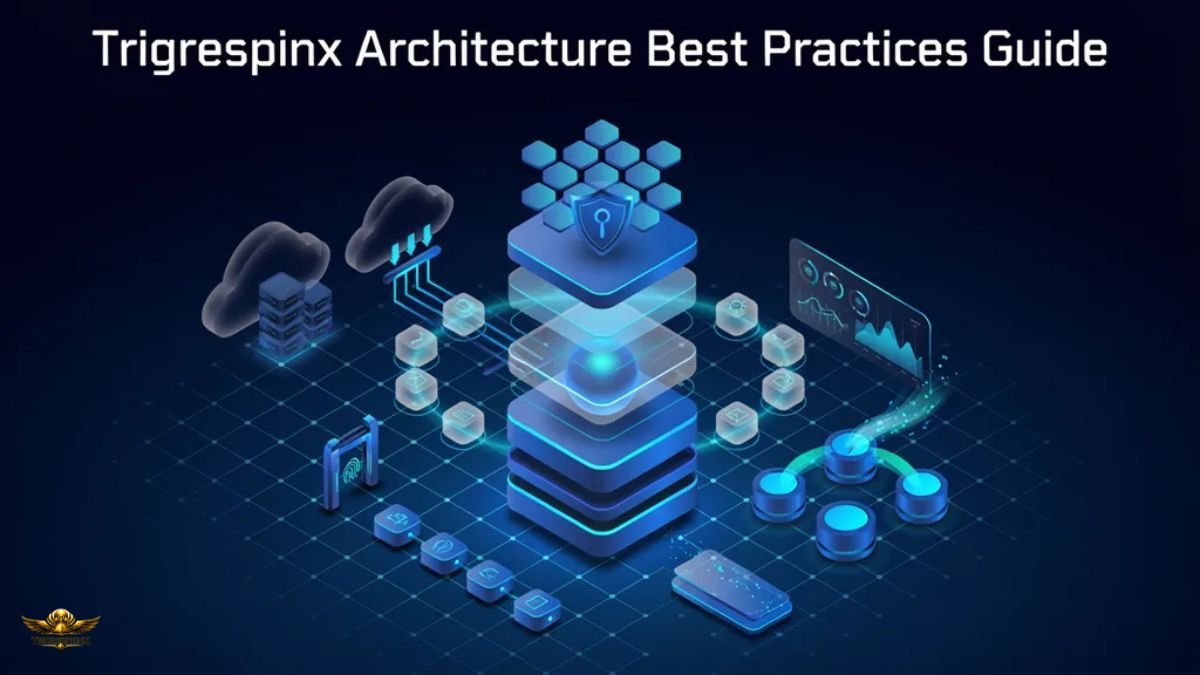











Cloud security protects data, applications, and infrastructure hosted in the cloud from breaches, misconfigurations, and attacks. This guide covers architecture, frameworks, provider-specific practices, tools, compliance, and future trends in simple, easy English.
Quick Overview
| Feature | Details |
| Topic | Cloud Security Best Practices |
| Category | Cybersecurity / Cloud Security |
| Purpose | Protect cloud data, applications, workloads, and infrastructure from cyber threats |
| Suitable For | Businesses, IT Teams, Security Professionals, Developers, Cloud Administrators |
| Cloud Platforms | AWS, Microsoft Azure, Google Cloud Platform (GCP), Hybrid Cloud, Multi-Cloud |
| Main Security Areas | IAM, MFA, Zero Trust, Encryption, Network Security, Monitoring, Compliance |
| Common Risks | Data Breaches, Misconfigurations, Ransomware, Insider Threats, DDoS, Insecure APIs |
| Essential Security Tools | CSPM, CWPP, CNAPP, CASB, SIEM, XDR, SOAR |
| Compliance Standards | ISO 27001, SOC 2, GDPR, HIPAA, PCI DSS, NIST CSF |
| Best Practices Covered | Least Privilege (PoLP), RBAC, MFA, Encryption, DevSecOps, Backup & Disaster Recovery, Continuous Monitoring |
| Latest Trends | AI-Powered Threat Detection, Agentic AI Security, Confidential Computing, Post-Quantum Cryptography, Multi-Cloud Governance |
| Goal | Improve cloud security posture, reduce cyber risks, and maintain compliance |
What Is Cloud Security?
Cloud security is the set of controls, tools, and policies that protect cloud-hosted data and systems from unauthorized access, loss, or attack.
Why Is Cloud Security Important?
It protects sensitive data, prevents costly breaches, keeps businesses compliant with laws like GDPR and HIPAA, and maintains customer trust.
How Does Cloud Security Work?
It works through layered protection: identity checks, data encryption, network controls, monitoring, and incident response, all working together.
Cloud Security Architecture and Core Components
A strong cloud security architecture combines identity management, network segmentation, encryption, logging, and automated policy enforcement into one connected system, so no single layer is a weak point.
Types of Cloud Security
Public Cloud Security
Protects shared, provider-hosted resources through strong access control and configuration management.
Private Cloud Security
Focuses on internal network protection and physical security for dedicated, single-tenant environments.
Hybrid Cloud Security
Secures the connection points between private and public environments with consistent encryption and policies.
Multi-Cloud Security
Maintains unified visibility and policy enforcement across multiple cloud providers.
Cloud Security Risks and Threats
Data Breaches
Unauthorized access to sensitive data, often due to weak credentials or unpatched systems.
Cloud Misconfigurations
Insecure default settings, like open storage buckets, remain the leading cause of cloud data exposure.
Identity Theft and Account Hijacking
Stolen credentials let attackers take over cloud accounts.
Insider Threats
Employees or contractors misusing access, intentionally or by mistake.
Malware and Ransomware
Malicious software that locks or steals data until a ransom is paid.
DDoS Attacks
Traffic floods that overwhelm cloud services and cause outages.
Insecure APIs
Poorly secured APIs give attackers an easy entry point.
Supply Chain Attacks
Attackers exploit trusted third-party vendors or software to reach the main system.
Cloud Shared Responsibility Model
| Area | Provider | Customer |
| Physical infrastructure | ✅ | ❌ |
| Network & hypervisor | ✅ | ❌ |
| OS patching | Shared | Shared |
| Data & app security | ❌ | ✅ |
| IAM & configuration | ❌ | ✅ |
Cloud Security Frameworks and Industry Standards
NIST Cybersecurity Framework for Cloud Security
Guides organizations to identify, protect, detect, respond to, and recover from cloud risks.
CIS Controls for Cloud Security
A prioritized set of safeguards for hardening cloud configurations and reducing attack surface.
Cloud Security Alliance (CSA) Cloud Controls Matrix
A detailed control framework mapping cloud-specific security requirements to major compliance standards.
Cloud Service Models and Security Best Practices
IaaS Security Best Practices
Secure VMs, networks, and storage since the customer manages the OS and above.
PaaS Security Best Practices
Focus on application code, data, and access controls, as the provider manages the platform layer.
SaaS Security Best Practices
Manage user access, data sharing settings, and integrations, since the provider handles the application itself.
Cloud Security Best Practices
Implement Strong Identity and Access Management (IAM)
Manage user identities, control access permissions, and enforce secure authentication to ensure only authorized users can access cloud resources and perform approved actions. Key practices include:
- Just-in-Time (JIT) Access Management – grants temporary access only when needed.
- Single Sign-On (SSO) – simplifies and secures login across cloud apps.
- Identity Federation – connects identities safely across multiple cloud platforms.
- Privileged Access Management (PAM) – tightly controls and monitors admin-level accounts.
Enable Multi-Factor Authentication (MFA)
Adds a second verification step so stolen passwords alone can’t grant access.
Apply the Principle of Least Privilege (PoLP)
Give users only the access they need, nothing more.
Use Role-Based Access Control (RBAC)
Assign permissions by job role for easier, safer management.
Adopt a Zero Trust Security Model
Verify every request, trusting no user or device by default.
Encrypt Data at Rest and in Transit
Protect stored and moving data using strong encryption. Related practices:
- Cloud Key Management (KMS) – securely manages encryption keys.
- Secrets Management – safely stores API keys, tokens, and credentials.
- Data Loss Prevention (DLP) – stops sensitive data from leaving approved channels.
- Tokenization – replaces sensitive information with non-sensitive tokens, reducing data exposure while maintaining application functionality and compliance.
Classify and Protect Sensitive Data
Label data by sensitivity level to apply the right protection.
Rotate Passwords, API Keys, and Secrets
Regular rotation limits damage from old or leaked credentials.
Secure Cloud Storage Buckets
Audit permissions regularly to avoid public exposure.
Protect Virtual Machines and Cloud Workloads
Harden and monitor workloads. Related practices:
- Infrastructure as Code (IaC) Security – automatically scans infrastructure templates for security misconfigurations, policy violations, and compliance risks before deployment.
- Serverless Security – secures function permissions and event triggers.
- Runtime Protection – detects threats while workloads are actively running.
- Cloud Asset Inventory Management – keeps a complete, updated list of all cloud resources.
Secure Containers and Kubernetes
Scan images and restrict permissions in containerized environments.
Protect APIs and Microservices
Implement strong authentication, API authorization, rate limiting, input validation, and secure API gateways to prevent unauthorized access, abuse, and API-based attacks.
Segment Networks and Isolate Critical Resources
Divide environments into zones to limit attacker movement.
Deploy Web Application Firewalls (WAF)
Filter web traffic to block common attacks like SQL injection.
Enable DDoS Protection
Absorb and mitigate large traffic floods automatically.
Perform Continuous Monitoring and Centralized Logging
Gain full visibility into activity. Related practices:
- Threat Intelligence – uses external data to anticipate emerging attacks.
- SOAR – automates response workflows across security tools.
- Cloud Forensics – investigates incidents to understand root cause and impact.
Automate Threat Detection and Incident Response
Speeds up detection and containment of attacks.
Scan for Vulnerabilities Regularly
Finds weaknesses before attackers do.
Patch Systems and Update Software
Closes known security gaps promptly.
Implement Secure Backup and Disaster Recovery
Ensures fast recovery from ransomware or data loss.
Integrate Security into DevSecOps Pipelines
Builds security checks directly into development workflows.
Perform Regular Security Audits
Confirms controls still match current standards and risks.
Meet Compliance and Regulatory Requirements
Avoids fines and enforces structured, proven practices.
Train Employees on Cloud Security Awareness
Reduces human error, the leading cause of breaches.
Cloud Security Best Practices by Cloud Provider
AWS Cloud Security Best Practices
Use IAM policies, enable GuardDuty, encrypt S3 buckets, and enable CloudTrail logging.
Microsoft Azure Security Best Practices
Use Azure AD Conditional Access, Microsoft Defender for Cloud, and encrypted Azure Storage.
Google Cloud Security Best Practices
Use IAM roles, enable Security Command Center, and apply VPC Service Controls.
Cloud Incident Response and Recovery Best Practices
Have a documented response plan, defined roles, fast containment steps, and tested recovery procedures to minimize downtime and damage.
How to Build an Effective Cloud Security Strategy
Start with a risk assessment, apply the shared responsibility model, choose the right tools, automate where possible, and review the strategy regularly.
Cloud Security Monitoring and Threat Detection
Combine SIEM, XDR, and threat intelligence to detect abnormal behavior across the entire cloud environment in real time.
Cloud Security Automation and Policy Enforcement
Automated guardrails enforce configuration rules and instantly flag or fix violations, reducing manual work and human error.
DevSecOps Best Practices for Cloud Security
Shift security left by scanning code, dependencies, and IaC templates early in the development pipeline, before deployment.
Key Cloud Security Metrics and Performance Indicators
Track mean time to detect (MTTD), mean time to respond (MTTR), number of misconfigurations found, patch compliance rate, and audit pass rate.
Cloud Security Best Practices for Small Businesses
Focus on MFA, basic IAM, encrypted backups, and low-cost CSPM tools to get strong protection without a large budget.
Enterprise Cloud Security Best Practices
Adopt zero trust, CNAPP platforms, dedicated security operations teams, and continuous compliance monitoring at scale.
Real-World Cloud Security Case Studies and Lessons Learned
Many major breaches trace back to simple misconfigurations or leaked keys — proving that consistent basics often matter more than advanced tools.
Essential Cloud Security Tools
| Tool | Purpose |
| CSPM | Finds misconfigurations |
| CWPP | Protects workloads |
| CNAPP | Combines posture and workload protection |
| CASB | Enforces policy between users and cloud apps |
| SIEM | Analyzes security logs |
| XDR | Correlates threats across systems |
Cloud Security Compliance Standards
| Standard | Focus |
| ISO 27001 | Information security management |
| SOC 2 | Trust and data protection reporting |
| PCI DSS | Payment card data |
| HIPAA | Health data (US) |
| GDPR | Personal data (EU) |
| NIST CSF | Risk management framework |
Common Cloud Security Mistakes to Avoid
Public storage buckets, weak passwords, skipped MFA, excess permissions, poor monitoring, and untested backups remain the most common failures.
Cloud Security Checklist
- MFA enabled everywhere
- Least privilege enforced
- Data encrypted at rest and in transit
- Storage permissions audited
- Continuous monitoring active
- Regular vulnerability scans
- Backups tested
Cloud Security Trends and Future Updates
AI-Powered Cloud Threat Detection
AI analyzes huge volumes of activity to catch threats faster than manual review.
Agentic AI Security in Cloud Environments
New controls are emerging to govern autonomous AI agents acting within cloud systems.
AI Workload Security
Protects AI models, training data, and pipelines from theft or manipulation.
Identity-First Cloud Security
Identity-first security shifts the focus from network boundaries to continuous user, device, and workload verification, ensuring secure access across cloud, hybrid, and multi-cloud environments.
The Evolution of Zero Trust Security
Zero trust is moving toward continuous, context-aware verification.
Confidential Computing for Cloud Data Protection
Protects data even while it’s being actively processed.
Post-Quantum Cryptography in Cloud Security
Prepares encryption to withstand future quantum computing attacks.
Multi-Cloud Security and Governance
Unified policies and visibility across multiple providers are becoming standard.
Next-Generation Cloud-Native Application Protection Platforms (CNAPP)
Future CNAPPs will add deeper AI-driven risk prioritization and automated remediation.
Frequently Asked Questions
What are the best cloud security practices? MFA, least privilege, encryption, continuous monitoring, and regular patching.
What is the biggest cloud security risk? Cloud misconfigurations remain the top cause of data exposure.
What is the shared responsibility model? Providers secure the infrastructure; customers secure their data, identities, and settings.
How can businesses improve cloud security? Strengthen IAM, encrypt data, monitor continuously, and train employees.
What tools are used for cloud security? CSPM, CWPP, CNAPP, CASB, SIEM, and XDR cover different protection layers.
Conclusion
Cloud security is an ongoing effort built on strong architecture, the right frameworks, provider-specific best practices, and constant monitoring. As threats and technology evolve, a proactive, layered strategy keeps cloud environments safe and compliant.